Artist Statement
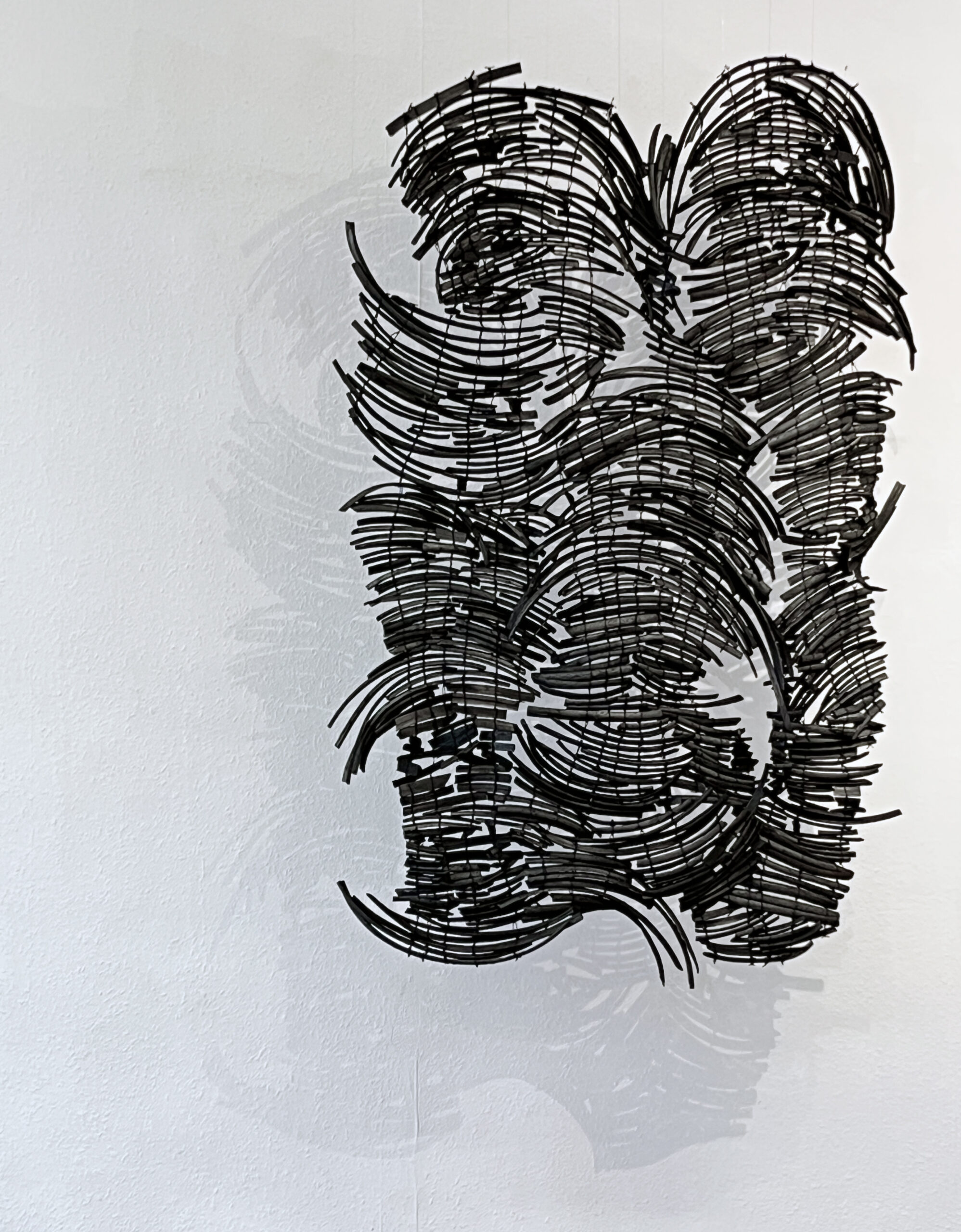
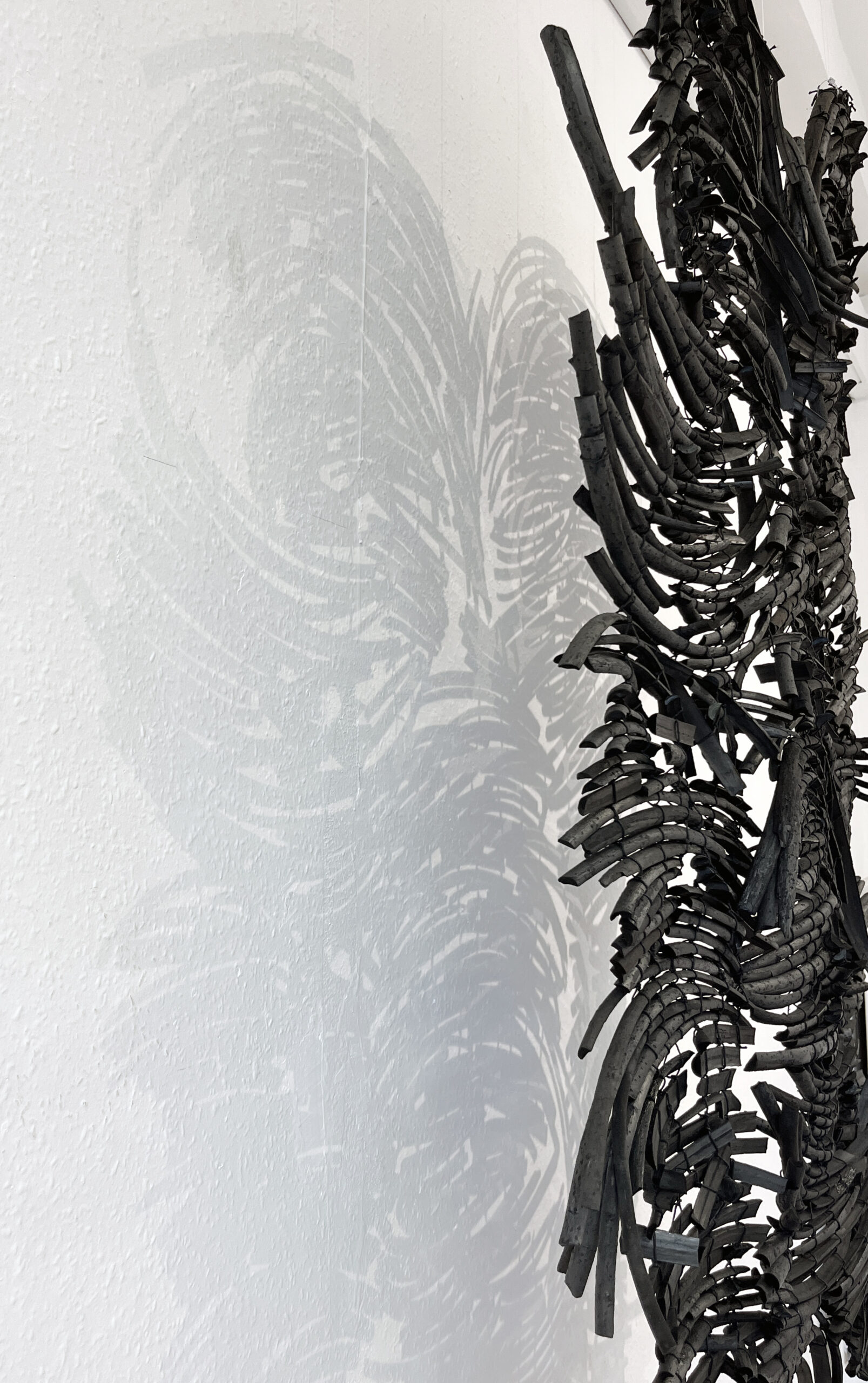
Ulrike Mohrs konzeptuelle Arbeiten sind Skulptur und Zeichnung zugleich.
Im Mittelpunkt steht ihr künstlerisches Forschen, das materielle, räumliche und zeitliche Prozesse sichtbar macht und in experimentellen Formaten erfahrbar ist.
Es entstehen ortsspezifische Materialsammlungen und poetische Eingriffe, hybride Formen, die mit dem Ausstellungsort verschmelzen und über längere Zeiträume hinweg entstehen. Sie sind eng mit dem jeweiligen Ort und seiner Geschichte verbunden. Eine bewusste Hinwendung zu armen Materialien und rohen Strukturen verweist auf Bezüge zu Arte Povera und betont das Ungeglättete, Prozesshafte der Arbeit.
Verkohlte Äste, gefundene Zweige oder kleinere Holzkohlefragmente bilden konservierte Zeugnisse und materielle Träger von Erinnerung. In der Transformation von Holz zu Kohle liegt ein poetisches und utopisches Potenzial: Holzkohle besteht nahezu aus reinem Kohlenstoff – fossil, dauerhaft, zerbrechlich und der Zeit enthoben. Zugleich eröffnet sie die Möglichkeit, über Ressourcen, Zeit und Nachhaltigkeit nachzudenken.
Vor dem Hintergrund von Klimaforschung, Waldbränden und CO₂-Emissionen gewinnt ihre Materialität eine aktuelle, ästhetische und symbolische Bedeutung. Aus der Perspektive von Jane Bennetts Vibrant Matter erscheint das Material als vitale, kollaborative Kraft im künstlerischen Prozess.
Für ihre Arbeiten verwendet Ulrike Mohr Materialien wie Kohle, pflanzliche Substanzen, Äste, Zweige oder ganze Bäume, Papier, Baumwolle, Kupfer, Wasser, Salz, Keramik, Beton, Glas oder Spiegel. Sie variieren in Größe und Maßstab und entstehen sowohl im Innen- als auch im Außenraum. Die Raumzeichnungen entfalten ein Spannungsfeld, in dem der Kontext der Objekte mit dem Raum in Resonanz tritt und das Material zur Zeichnung wird.
Es zeichnet sich selbst.
Ulrike Mohrs conceptual works exist as sculpture and drawing.
Central to her practice is an artistic inquiry that reveals material, spatial, and temporal processes through experimental formats.
Site-specific material collections and poetic interventions form hybrid structures that integrate with the exhibition space and evolve over time, remaining intimately linked to the site and its history. A conscious engagement with humble materials and raw structures references Arte Povera and emphasizes the unpolished, process-oriented nature of the work.
Charred branches, found twigs, or smaller fragments of charcoal form preserved remnants and material mediums of memory. In the transformation of wood into charcoal lies a poetic and utopian potential: charcoal consists almost entirely of pure carbon — fossil, durable, fragile, and beyond time. At the same time, it encourages reflection on our use of resources, the passage of time, and sustainability.
Against the backdrop of climate research, forest fires, and CO₂ emissions, its materiality acquires a contemporary, aesthetic, and symbolic significance. From the perspective of Jane Bennett’s Vibrant Matter, material appears as a vital, collaborative force within the artistic process.
For her works, she uses materials such as charcoal, plant material, branches, twigs, or entire trees, paper, cotton, copper, water, salt, ceramics, concrete, glass, or mirrors. They vary in scale and size and are created both indoors and outdoors.
The spatial drawings unfold an interplay in which the context of the objects resonates with the space, and the material becomes drawing.
It draws itself.