Signalkugel
Kinetic light sphere that reacts to ship traffic on the river Spree
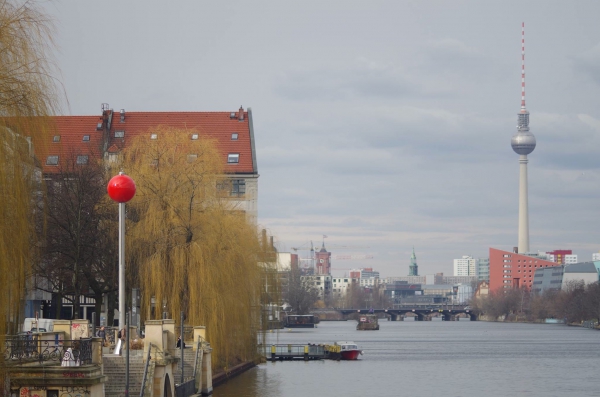
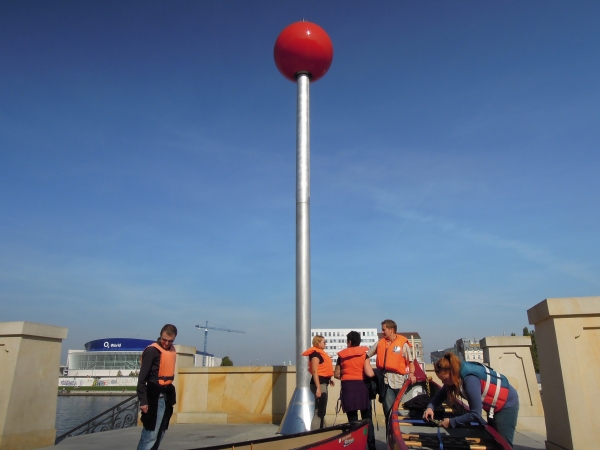
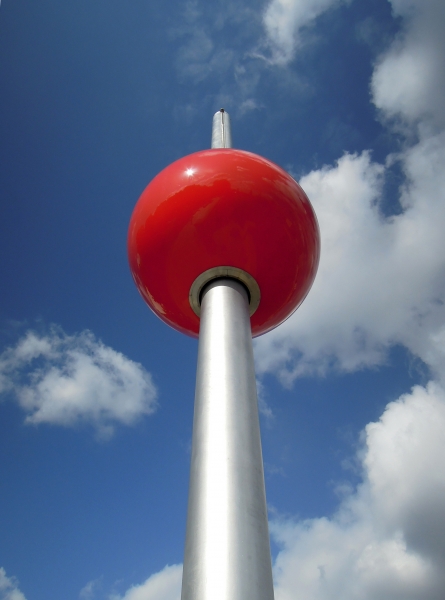
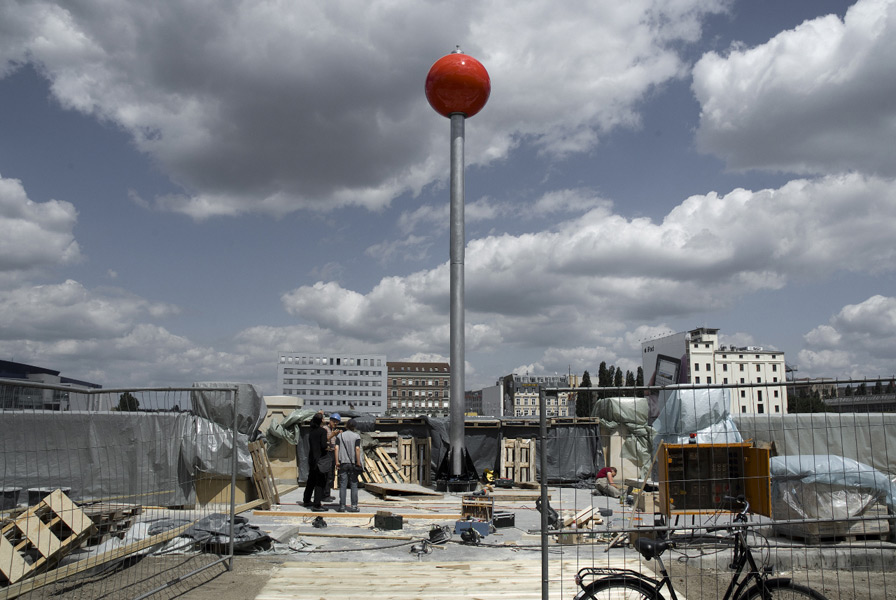
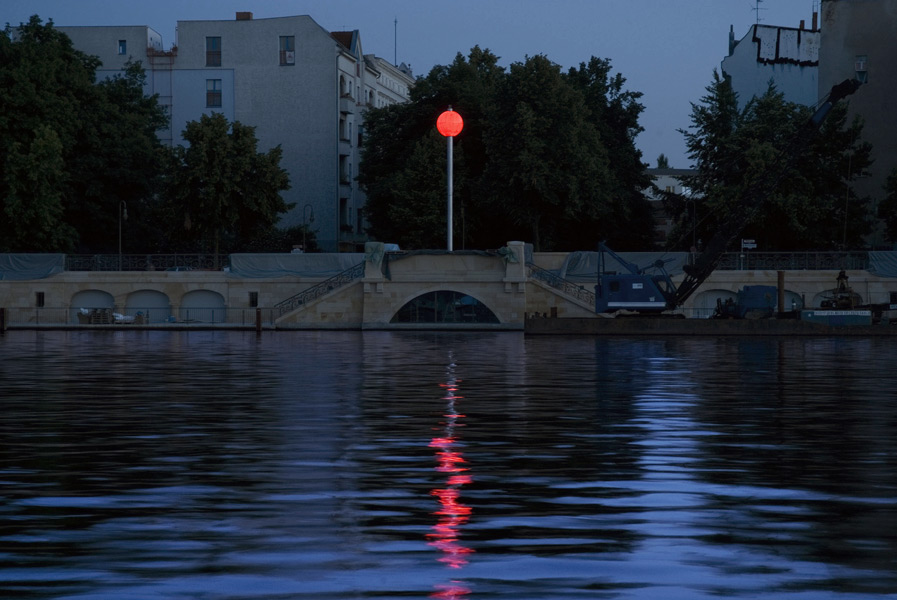
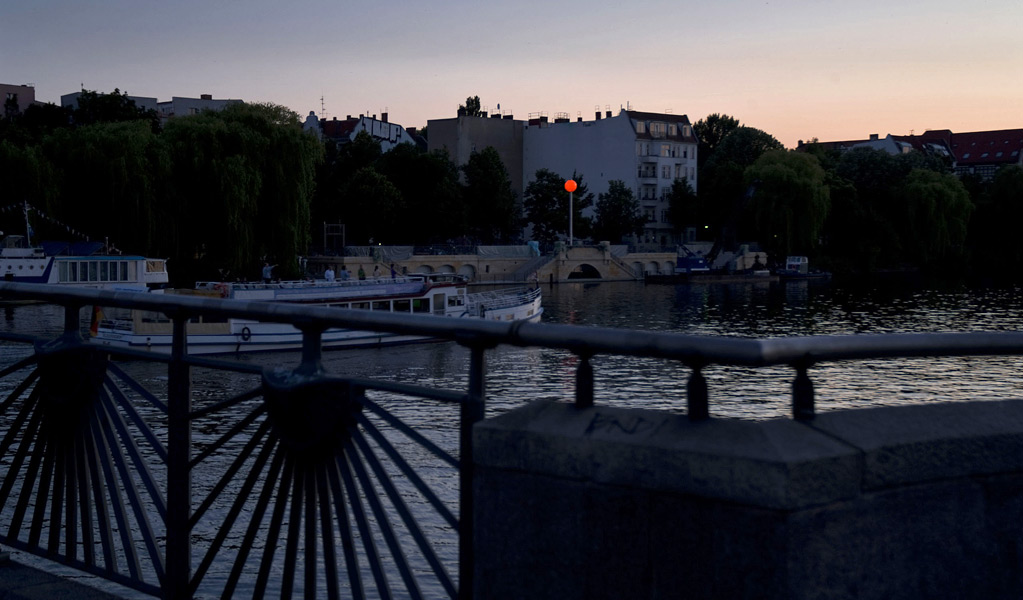
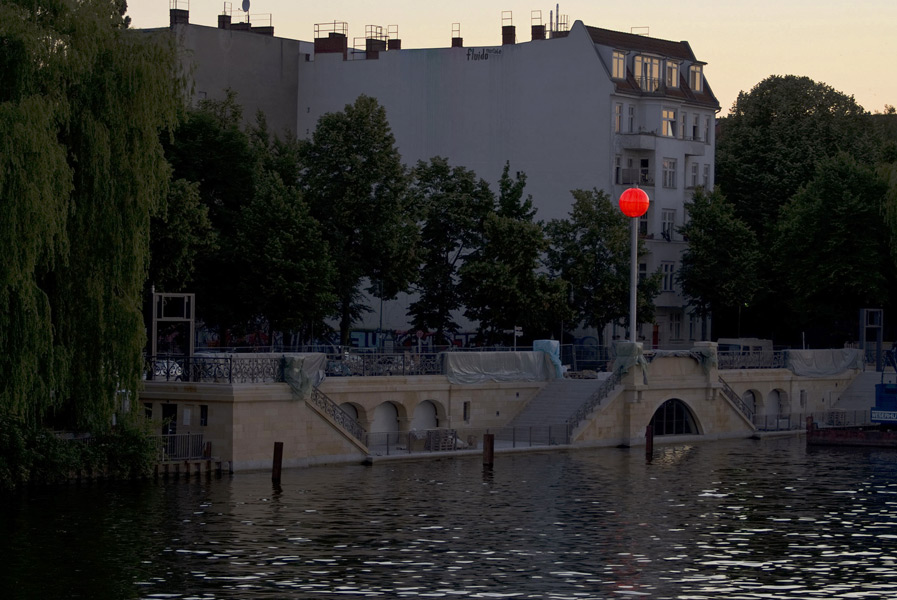
The Signalkugel (ZEITBALL) is a moving illuminated sphere that responds to passing ship traffic on the River Spree via a motion sensor. As a vessel passes by, the sphere drops downward and is then returned to its original elevated position using compressed air. At the base of the mast, a panorama etched in stainless steel illustrates the functional sequence of the Signalkugel from both side and top views, as well as indicating the cardinal directions. The pneumatic system and compressor are housed within the quay installation.
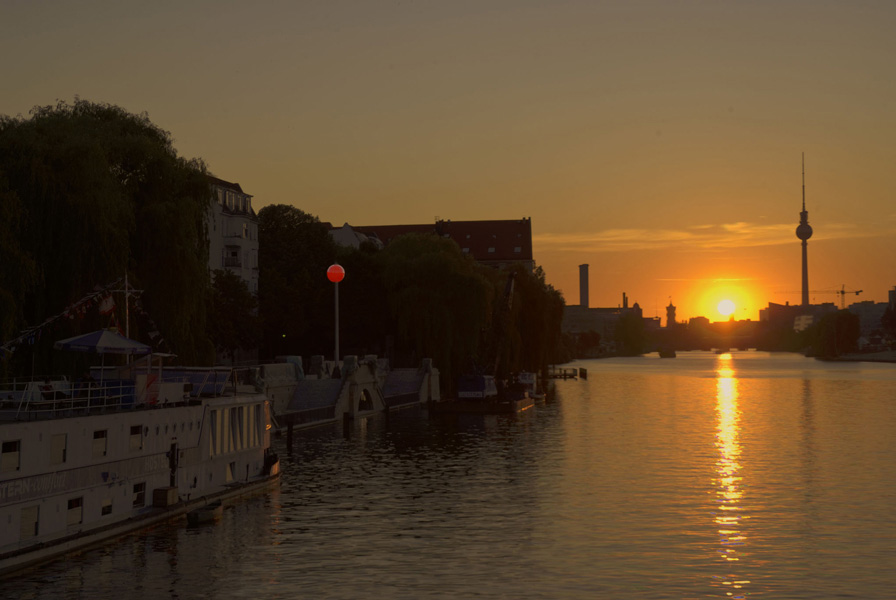
Installed in place of the former lighthouse that once stood at the historic twin quay, the Signalkugel acts as a vertical light signal. The original lighthouse was destroyed during the war, and in later years—when the inner-German border ran directly through the Spree—several children tragically drowned. Today, the Signalkugel marks this dynamic and historically charged location and can be seen from the opposite bank of the Spree, from the Oberbaum Bridge, and even from Schlesisches Tor. With its nautical references, the installation echoes the visual language of buoys and maritime beacons.
Until the 19th century, navigation on the open seas depended heavily on precise timekeeping. To assist with this, many major port cities used timeballs—large nautical spheres hoisted up masts in the harbor and dropped at a fixed time each day. Sailors could calibrate their chronometers accordingly, enabling them to determine their exact longitude and latitude at sea.
Art in Architecture
Doppelkaianlage May-Ayim-Ufer, Berlin-Kreuzberg, since 2011
Height: 10 m, diameter of the signal sphere: 1.60 m
drop height of the sphere: approx. 4.50 m
Signal sphere made of GFRP with LED lighting,
aluminum mast with internal pneumatic piston,
compressor, electronic and pneumatic control system,
motion sensor, etched stainless steel graphic.
The project was commissioned and is owned by the State of Berlin.